Raspberry plants can be cultivated either in the ground or in a substrate. Ideally, the soil should have a loose structure to ensure good regulation of water, nutrients, and air. Soil testing or analysis of previous crops and irrigation water can be very informative.
Substrate Cultivation
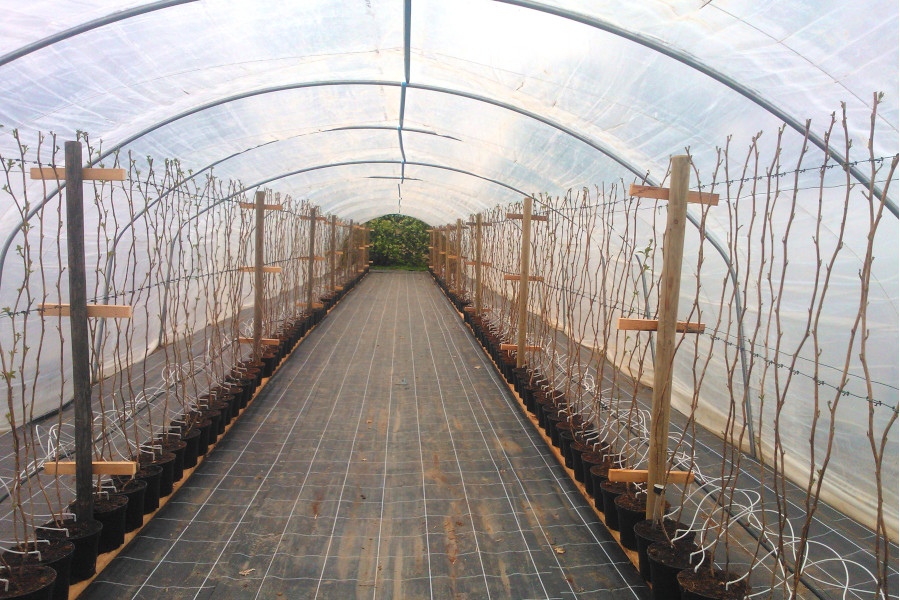
In substrate cultivation, raspberry long-cane plants are primarily used. These are largely grown in containers (potted long-cane plants) or, alternatively, directly in substrate troughs. For successful container cultivation, it is important to ensure that the plants are regularly supplied with water and nutrients, while waterlogging must be strictly avoided. Continuous drip irrigation is recommended for optimal nutrient supply in this method. Raspberries have higher nutrient requirements than strawberries. Flat or slightly sloping surfaces are ideal for irrigation. Reasons for substrate cultivation include soil scarcity, soil exhaustion, the use of a timed cropping system, improved fruit quality, weed suppression, and higher yields. Specialized advice on fertilization and cultivation practices is essential for substrate cultivation.
Scheduling
Scheduling is particularly interesting for those who want to plan a specific harvest period with consistently high fruit quality. This cultivation method is made possible by using chilled raspberry canes. Depending on the weather, approximately 10-12 weeks pass from planting to harvest. The plants are staggered to ensure a long harvest period.
Recent Comments