Cane Management and Pruning
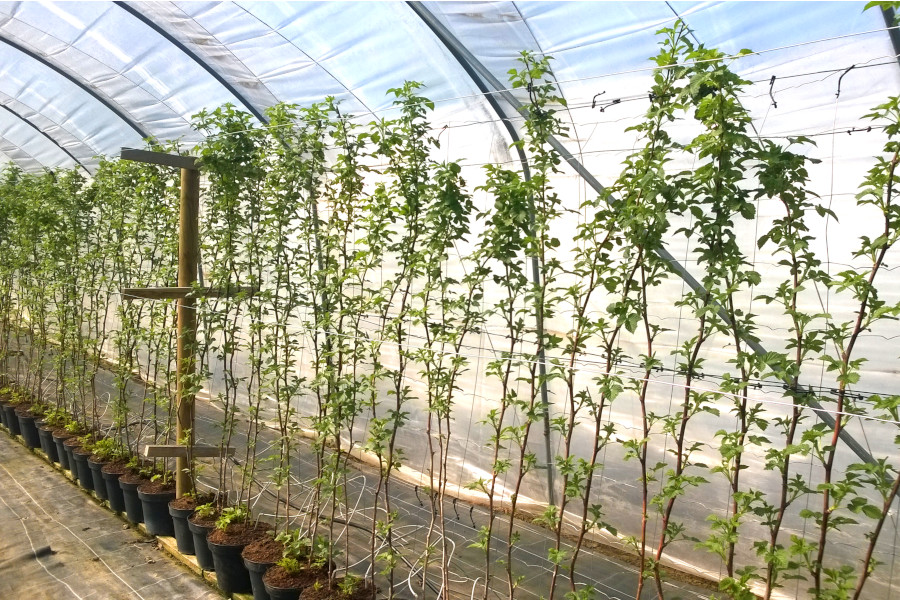
Cane management and pruning are essential aspects of raspberry cultivation. The timing and method of pruning depend on whether the raspberries are summer- or autumn-fruiting.
Generally, it is also important to remove diseased canes to prevent the disease from spreading to the entire plant.
Summer Raspberries
The first pruning takes place after the harvest period in summer. The brownish canes from which this year’s harvest was made are cut back close to the ground. This is important so that the new green canes that have already formed can grow strong.
The second pruning of summer raspberries is carried out after the last frost, around March. This pruning is crucial for achieving the highest possible yield and good fruit size. The canes are reduced to the desired number and cut back close to the ground. It is recommended to leave 10-12 canes per plant. This ensures that the healthiest and strongest canes are retained.
Autumn Raspberries
Autumn raspberries are pruned in autumn after the harvest season. All canes of the raspberry plant can be cut back to ground level. If desired, a few healthy canes can be left over the winter. In spring, the plant will produce new canes with fruit for the next autumn harvest.

Fertilization and Irrigation
Proper fertilization and irrigation are essential for fruit quality, fruit size, and plant health. Raspberry plants can be cultivated in the ground or in a substrate. Ideally, the soil should have a loose structure to ensure good regulation of water, nutrients, and aeration. Soil testing, analysis of previous crops, and irrigation water can be very informative. This analysis provides insight into the nutrient levels in the water, allowing you to adjust accordingly. The first waterings are recommended without fertilizer. This gives the plant the opportunity to absorb the initial nutrients from the soil and stimulates root growth. Afterward, fertilization can be gradually introduced. Irrigation is typically provided via drip irrigation.
Plant Protection
With 1-year-old or at most 2-year-old plants, there are fewer problems with cane diseases. Common problems in protected raspberry cultivation include spider mites, aphids, and powdery mildew. Beneficial insects have proven very effective in protected cultivation. Depending on the region and variety, problems with Phytophthora/root rot and overwatering are also known. Particular attention should be paid to this, especially during a rainy spring. From July/August onwards, daily harvesting and netting of the plants are crucial to minimize the risk of spotted wing drosophila (SWD).
In protected cultivation, pesticide use is not strictly necessary, as susceptibility to pests is very low.
Harvesting
Raspberries should be harvested every one to two days. Care should be taken to pick the plants thoroughly and cleanly. This promotes better fruit shelf life and reduces the risk of botrytis infection. It is recommended to place the harvested raspberries in the sales tray immediately after picking to preserve their quality as much as possible. Subsequent rapid cooling is crucial for the fruit’s shelf life.
Recent Comments